
On this page
What is a septal perforation?
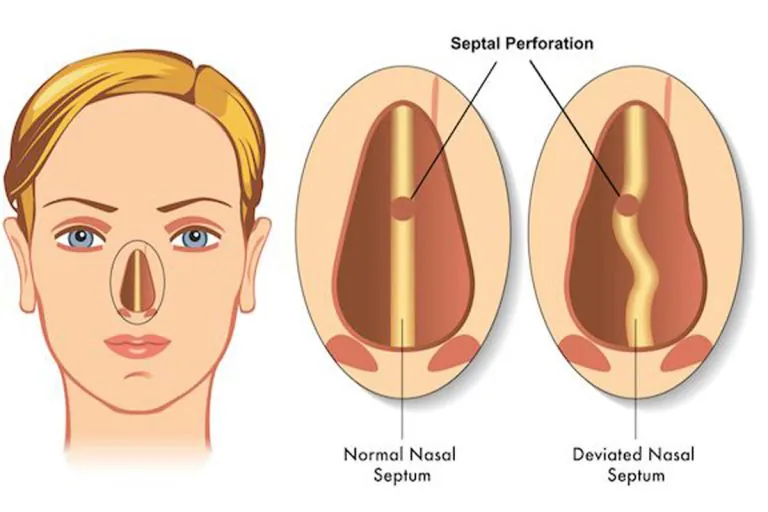
The cartilage and bone structure dividing the nostrils is called the septum. A hole can form in the septum for various reasons; in that case a perforation repair is performed.
Causes
Today the most common cause of septal perforation is previous nasal surgery. Other main causes include:
- Trauma
- Chemicals
- Infectious (inflammatory) diseases
- Excessive use of nasal sprays
Symptoms
The most common complaints are nosebleeds, crusting, nasal blockage, pain and whistling when breathing. About 15% of patients have no complaints at all and some are unaware of the perforation; these patients do not need treatment.
How is it repaired?
Many surgical techniques have been described. In the technique we use, the fascia (muscle sheath) is taken through a small incision on the outer thigh and stitched over the hole inside the nose. Because the work inside the nose is done endoscopically, no additional incision is made on the nose.
After surgery
The shaped splints placed inside the nose are removed after 7–10 days. After surgery the patient rinses the nose and keeps it moist with moisturising nasal drops.
Results of any surgical or interventional procedure may vary from person to person.
The information on this page is for general information only and does not replace an examination, diagnosis or treatment. The right approach for you is decided after a consultation.
Frequently asked questions
Does every septal perforation need treatment?
No. About 15% of patients have no symptoms; they do not need treatment.
Is an incision made on the outside of the nose?
No. The repair inside the nose is done endoscopically; a small incision is made on the outer thigh to take the graft.
When are the splints removed?
The splints placed inside the nose are removed after 7–10 days.