On this page
Septal deviation and symptoms
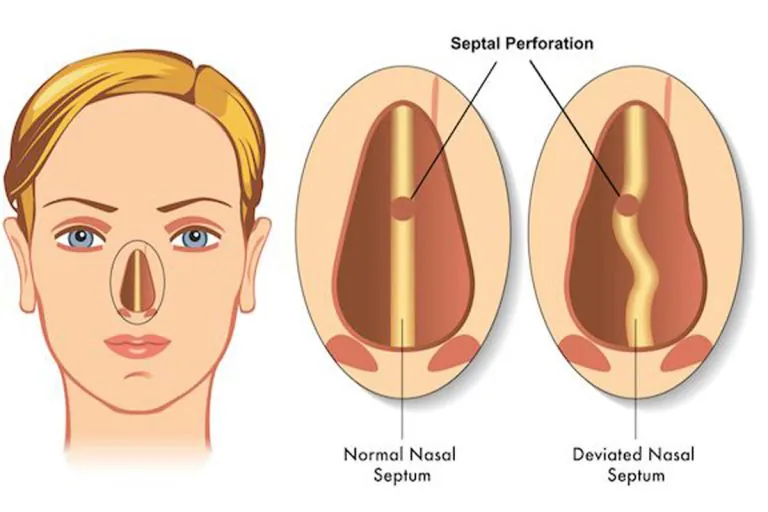
The septum is the internal wall of bone and cartilage. A deviation can restrict airflow on one or both sides, but not every deviation causes symptoms or needs surgery.
Persistent blockage, mouth breathing or a history of nasal injury can prompt assessment. Symptoms alone are not enough to establish a need for surgery.
Identifying the source of obstruction
Examination considers the turbinates, nasal valves and external support as well as the septum. When allergy or mucosal swelling contributes, appropriate medical treatments are considered too.
Surgery may be considered when symptoms relate to the structural deviation and non-surgical approaches have not provided sufficient relief.
Septoplasty versus septorhinoplasty
Septoplasty focuses on the internal septum and does not aim for cosmetic reshaping. Septorhinoplasty also addresses the external framework and appearance where appropriate.
If nasal valve narrowing, weak support or external deviation affects airflow, septoplasty alone may be insufficient. The proposed components of treatment are explained after examination.
Surgery and associated procedures
Correction of the deviated areas aims to preserve nasal support. Turbinate reduction options may be discussed if enlargement contributes to blockage; an additional procedure is not required for everyone.
Anaesthesia, operating time and hospital observation depend on the scope of surgery. Internal silicone supports may be placed if required, with removal explained in the individual follow-up plan.
Recovery and reviews
Swelling or crusting can cause continued blockage early on. The recommended nasal care and review appointments help monitor healing.
Follow individual instructions for rinses, products and return to activities. Blockage during the first days does not show the final breathing outcome.
Risks and limitations
Possible risks include bleeding, infection, anaesthetic complications, a hole in the septum and continuing symptoms. Although external reshaping is not intended, an unwanted change can occur as a complication. Expected benefit and individual risks are discussed before surgery.
Results of any surgical or interventional procedure may vary from person to person.
The information on this page is for general information only and does not replace an examination, diagnosis or treatment. The right approach for you is decided after a consultation.
Frequently asked questions
Does septoplasty change the shape of the nose?
Changing appearance is not its aim. Septorhinoplasty is considered separately if the external framework or appearance also needs correction. An unwanted shape change can occur as a complication.
Does every deviated septum need surgery?
No. A deviation may cause no symptoms; concerns, examination and other possible causes of blockage are considered together.
Does septoplasty resolve every breathing problem?
No. Enlarged turbinates, mucosal conditions or nasal valve narrowing may contribute. Correcting the septum alone may be insufficient without assessing these areas.
Are splints and recovery times the same for everyone?
No. Supports, their removal and return to work depend on the procedure and healing. Follow-up instructions are individual.